
The news from Gaza reveals a deepening humanitarian tragedy. It exposes mass crimes that lay bare an international order increasingly distant from states’ commitments to human rights. Since the brutal terrorist attack carried out by Hamas on October 7, 2023—which continues to prolong the suffering of the hostages—Israel’s response has turned into a massive offensive, resulting in ethnic displacement and the destruction of every condition necessary for life: hospitals, schools, homes. Statements from Israel’s highest authorities have dehumanized the Palestinian population in Gaza, equating them with Hamas.
The United Nations system, created after the postwar agreements of 1945 with the promise of “never again” allowing states to annihilate populations, now stands weakened and discredited. It shows clear signs of impotence in the face of the machinery deployed by Israel, with participation by the United States and other powers.
In December 2022, the UN General Assembly requested an advisory opinion from the International Court of Justice (ICJ). It posed questions regarding the legal consequences of Israel’s violation of the Palestinian people’s right to self-determination and of its prolonged occupation, settlement, and annexation of the occupied Palestinian territories. It also asked about the discriminatory measures imposed and how Israel’s policies and practices affect the legal status of the occupation, as well as the implications of that status for all states and for the United Nations.
The ICJ issued its opinion in July 2024. It declared Israel’s occupation and segregation of Palestinians illegal, ordered states not to cooperate with that situation, and established parameters that could serve as the basis for UN sanctions and actions. In November 2024, the ICJ warned that there was a risk of genocide and ordered provisional measures to protect the Palestinian population. In December, the General Assembly adopted by a wide majority a resolution urging Israel to comply with its international obligations as an occupying power. It also reaffirmed the importance of the UN agency for Palestinian refugees (UNRWA) and called on states to support it.
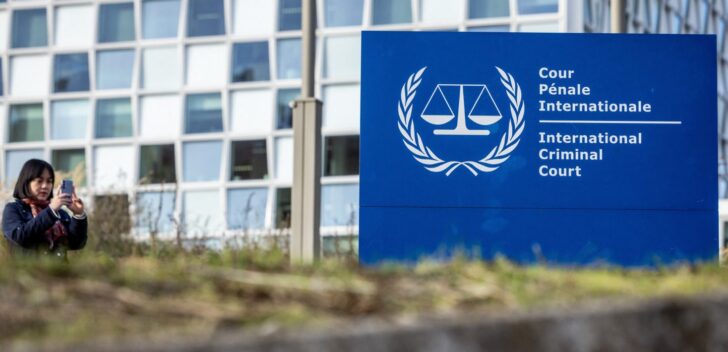
In the case brought by South Africa, the International Criminal Court issued arrest warrants against Prime Minister Benjamin Netanyahu, his former defense minister, and one of Hamas’s leaders, determining that there is reasonable evidence that they bear responsibility for war crimes and crimes against humanity.
At the same time, key bodies of the international human rights protection system have been actively denouncing and documenting the extreme situation. UN Special Rapporteur on the Palestinian Territories Francesca Albanese has continuously urged the international community to act to stop the ongoing atrocities. Twenty-seven other UN experts have likewise warned that the international community must act immediately and that Israel must cease obstructing safe, effective, and dignified humanitarian assistance. Local and international organizations are also documenting crimes, denouncing violations, and calling for solidarity.
Despite these repeated warnings from international bodies, the bombings continue—crossing every boundary of international law—while famine deepens. There is a growing sense that no rule or force is capable of stopping the massacre and the resulting annexation of the territory. The UN Security Council—the only body with the authority to impose a political solution—remains paralyzed by the United States’ veto, which has blocked a ceasefire and the effective delivery of humanitarian aid. Furthermore, the United States has imposed sanctions on the International Criminal Court, its officials, UN members, and both Palestinian and non-Palestinian organizations cooperating with the investigations.
Gaza as a Point of No Return
In August, Israel’s Security Cabinet announced Prime Minister Benjamin Netanyahu’s plans to “take control” of Gaza—a territory already largely destroyed, where nearly one million people survive in extreme conditions. This advance is presented as part of an alleged effort to free hostages, yet it has been rejected by some of their families, by groups of reservists and retired pilots, and even faced objections from Israel’s own military leadership.
Since the beginning of its term, the Argentine government has shown total alignment with the government of Israel, without any reconsideration of its position despite overwhelming evidence of crimes. As a result, Argentina has stood almost alone alongside the United States and Israel in UN General Assembly votes.
The international human rights system has not been able to stop the massacre—one it both foresaw and continues to denounce in real time. Yet even in its powerlessness, it remains a necessary tool: it creates an official shared record of the genocide, sets out rules, and paves the way to demand accountability. From that standpoint, we join the urgent international call for an end to attacks on the Palestinian population.