
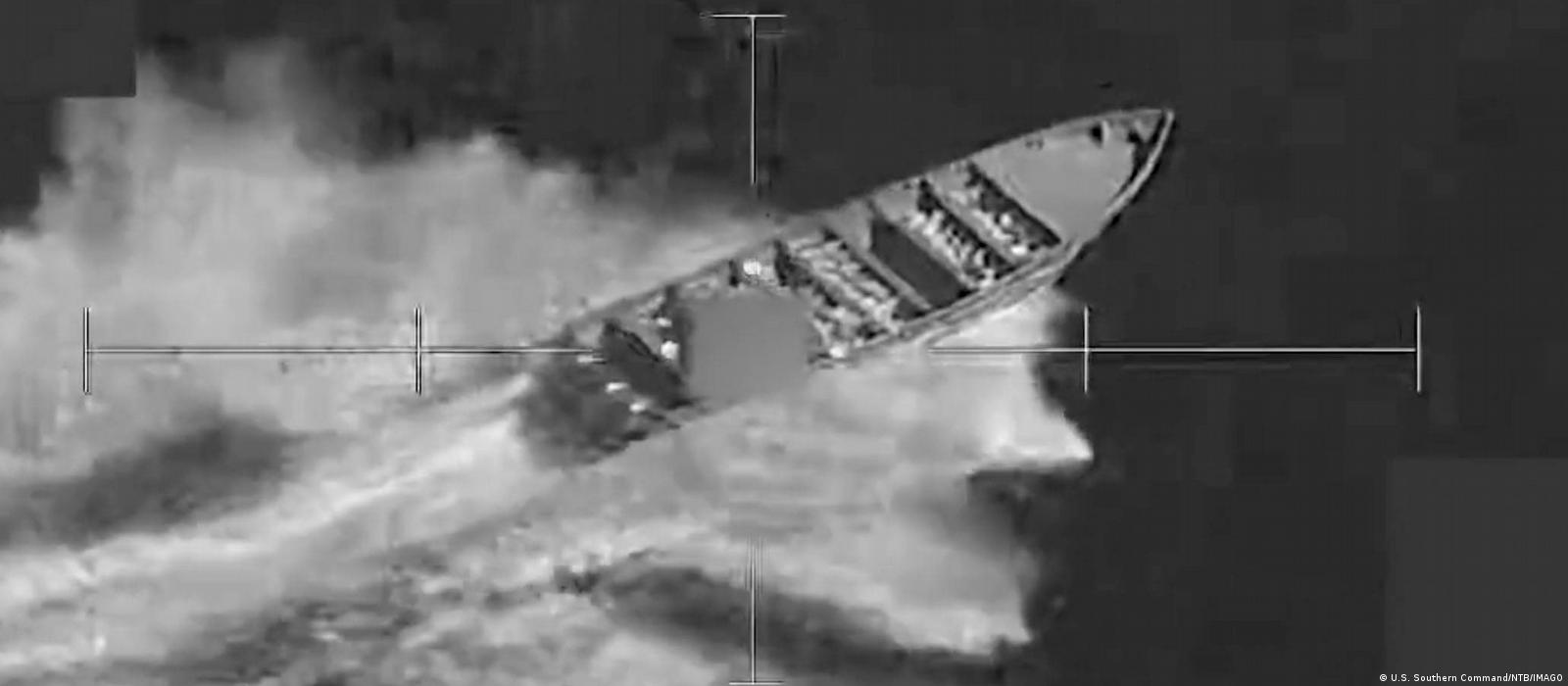
On August 25, 2026, U.S. Southern Command bombed a vessel in the Caribbean Sea, killing the four people on board. Its commander, General Francis Donovan, stated: “We will hunt, disrupt, and defeat these narco-terrorist networks.” With this strike, the United States has destroyed 69 vessels in the Caribbean Sea and the Eastern Pacific Ocean and killed 227 people since September 2, 2025.
Little is known about the boats and their crews. The Pentagon has admitted it does not know the identities of those killed. Although it releases videos of the strikes on social media to sensationalize each incident, the objectives and success metrics of this policy remain secret. Some of the victims identified through journalistic investigations were fishermen or coastal workers from low-income backgrounds. The lack of transparency surrounding these strikes is compounded by the fact that victims’ families are afraid to report that their loved ones have not returned home. They may never find out what happened.
For the U.S. government, the fact that the boats were navigating along “known” trafficking routes was sufficient grounds to decide to execute their crews without trial. It almost never presented evidence that they were transporting illegal substances. Following the designation of various criminal organizations as “terrorist” groups, the United States treats these alleged traffickers as enemy combatants and applies the rules of war to authorize their killing. United Nations experts have stated that international law establishes very strict rules regarding the use of lethal force—such as the requirement that it be used only in the face of an imminent threat, a condition not met in these operations. In reality, these are extrajudicial executions. The fact that the United States and countries that endorse its actions—such as Argentina, Ecuador, and now Colombia—justify these attacks by citing an “armed conflict” with criminal organizations does not automatically prove that such a conflict exists, let alone grant them carte blanche to kill.
Data available to date suggests that destroying the vessels has not reduced the flow of drugs into the United States. However, this policy is being extended to ground-based military operations. Joint operations with Ecuador have already taken place—including the bombing of what turned out to be a dairy farm—and Colombia’s new president recently authorized such operations as well by signing the “Shield of the Americas” agreement. This initiative, which brings together 19 countries—including Argentina—consolidates a U.S. strategy for the region: militarizing the control of organized crime by merging the “war on drugs” with the “fight against terrorism.” However, the political-ideological alignment Washington seeks to build is far from a policy that addresses the region’s needs and interests regarding organized crime. It is a way of governing what they consider their “backyard” by force. The cost is evident: it is already measured in hundreds of Latin American lives.