
Every year, the climate change conference is an opportunity for states, politicians, diplomats, businesses, scientists, regional organizations, and civil society to seek agreements on how to tackle the climate emergency and halt global warming, which affects the entire world. Among the key issues in 2025 were the goals, deadlines, infrastructure, and financing for countries to adapt to the changes needed to combat environmental impacts, as well as ways to support the most affected communities.
The 30th edition of the COP was held between November 10 and 21 in Belém Do Pará. It was the first one held in the Brazilian Amazon—a location chosen as a symbol of what is at risk— a decade after the last time it was held in Latin America.
The climate crisis affects the well-being of all people, especially those who are in a more vulnerable situation. From our work in defending human rights, we understand it is a priority to build joint strategies to counteract the crisis and achieve a healthy environment. This is essential to ensuring that food, health, housing, and land are guaranteed rights.
That is why CELS participated in the conference for the first time, contributing information, input, and positions. We also proposed debates on issues affecting our country and the region. The energy transition was a central theme of the meeting, on which we spoke out together with other members of the International Federation for Human Rights (FIDH). However, at the end of the discussions, no common commitment was reached to move towards a just transition.
This Brazilian edition of the COP was also an opportunity to hold the People’s Summit: a parallel meeting to exchange experiences among thousands of activists, organizations, and social movements that seek to make environmental protection an increasing priority for states and societies. This space is central to ensuring that the demands for protection and experiences of territorial organizations are reflected in the COP agreements.
The environmental impact from and in the South
We went to the COP with contributions on the lithium industry in Argentina, Chile, and Bolivia, the three countries with the highest production in the region but without unified state strategies. The climate crisis demands decarbonization, but that cannot renew colonialism. Much less can it be based on repression or equating the struggle of indigenous communities with “terrorist threats to national security.” We argued that access to information, participation, and free, prior, and informed consent of those who inhabit the territories is essential and must be respected.
In Argentina, the extractive model is based on two pillars: the creation of regulations that seek to attract investment through tax exemptions and legal protections, such as the RIGI; and the criminalization of protest, putting pressure on affected communities so that they cannot organize or demonstrate. We held these debates in a series of events promoted by the International Network on Civil Liberties Organizations (INCLO), which we shared with organizations such as Andhes (Argentina), Dejusticia (Colombia), Conectas (Brazil), Legal Resources Centre (South Africa), and Human Rights Law Network (India), among others.
“Defending food: defending the future” was the event at which we presented on the consequences of agribusiness on the environment and human rights. In a talk organized with Dejusticia, Cajar, Terra de Direitos, the European Center for Constitutional and Human Rights (ECCHR), and Deutsche Umwelthilfe, we told the story of Sabrina Ortiz in Pergamino (Buenos Aires, Argentina). Exposure to soybean fumigants seriously affected her health. In our country, a trial is underway for her case, and at the international level, we found limitations in the OECD for a complaint against Bayer to prosper, a sign of the difficulties in holding companies accountable for the consequences of their business models on human rights.
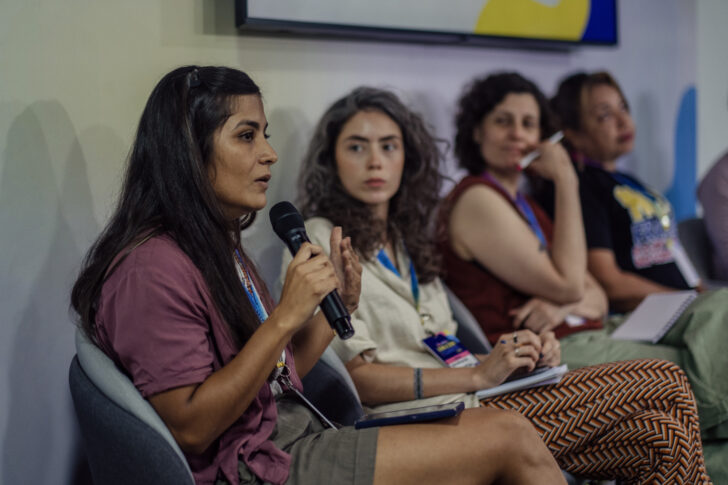
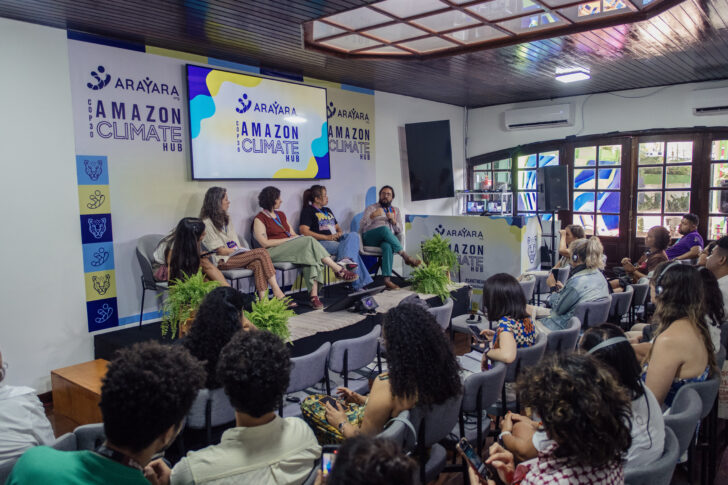
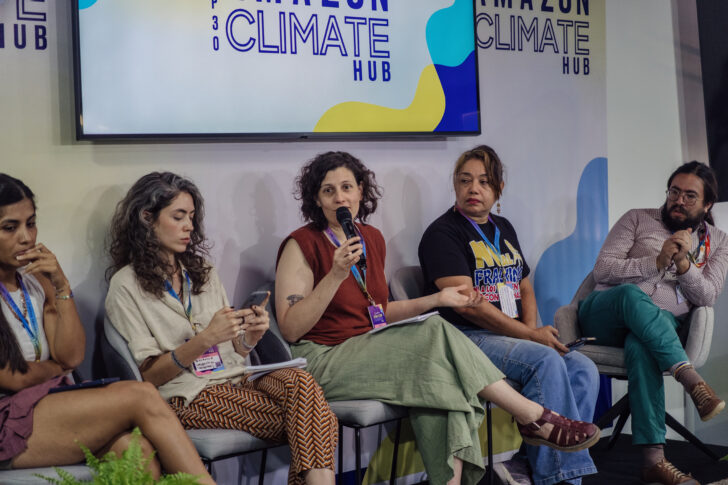
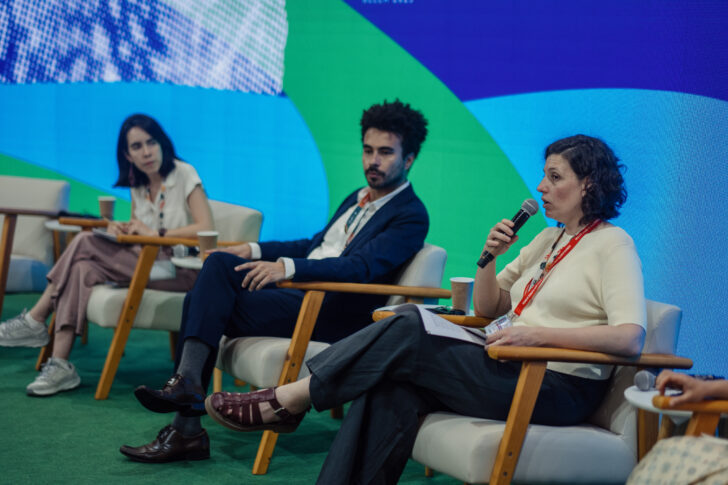
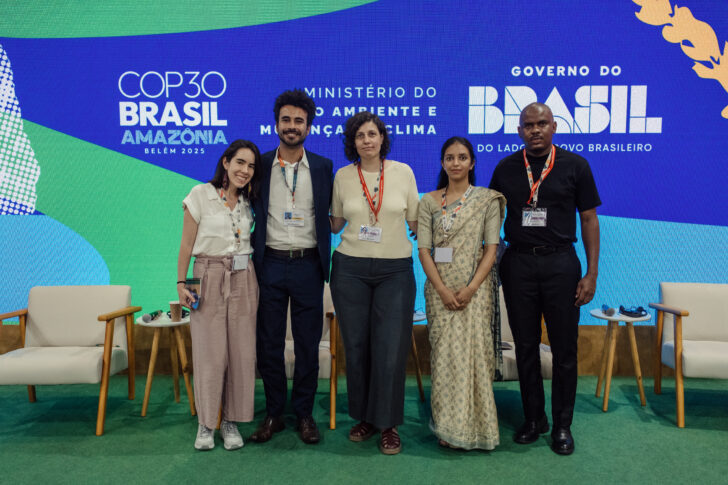
Photo: Susi Maresca / CELS | INCLO